
Search Michigan Bench Warrants
Michigan bench warrants are issued by Circuit Courts and District Courts in all 83 counties when a person fails to show up for a court date or breaks a court order. You can search for bench warrant records through the MiCOURT case search system, local court clerk offices, and county sheriff departments. Each county runs its own court system with its own records. Some courts let you look up case info online at no cost. Others need you to call or visit in person. This page walks you through how to find bench warrant records in Michigan, what tools are out there, and where to go for help.
Michigan Bench Warrants Overview
Where to Find Michigan Bench Warrants
The main place to look for bench warrant records in Michigan is the court that issued them. Michigan has two levels of trial courts. Circuit Courts handle felony cases and civil matters over $25,000. District Courts deal with misdemeanor crimes, traffic tickets, and civil cases up to $25,000. Both types of courts can issue bench warrants. The clerk of each court keeps records of all warrants tied to cases in that court.
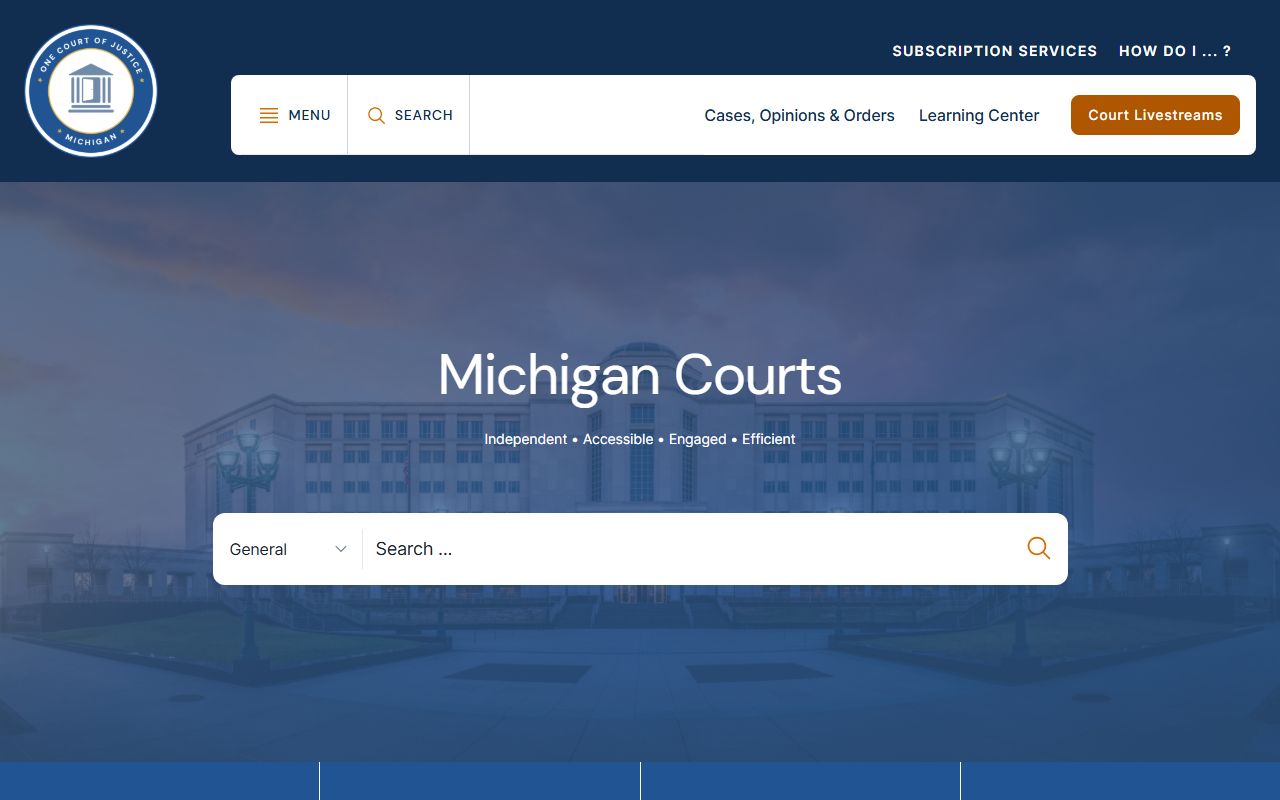
Michigan does not have one central public database that lists all active bench warrants. Instead, records are spread across the courts and sheriff offices in each of the 83 counties. The MiCOURT Case Search system is the closest thing to a statewide tool. It lets you look up case info from many Michigan courts. You can search by name, case number, or date. The system shows case status and docket entries, which may note when a bench warrant was filed. But it does not show real-time active warrant status. For that, you need to check with the local court or sheriff.
County sheriff offices also play a key role. They keep records of warrants and carry out arrests. Most will tell you if a warrant is active when you call or visit. The Wayne County Sheriff, for instance, runs a Warrant Enforcement Bureau that handles bench warrant checks at (313) 224-0414. Oakland County has a Records Division at (248) 858-5517 for the same purpose.
Note: Active bench warrants in Michigan do not expire. They stay in effect until the person shows up in court, gets picked up by police, or a judge recalls the warrant.
How to Search Bench Warrants in Michigan
There are a few ways to search for bench warrants in Michigan. The method you pick depends on what you need and how fast you need it. Online tools work best for basic case info. Phone calls and in-person visits get you the most up-to-date warrant status.
The MiCOURT portal is free and open to the public. It covers case data from Circuit Courts, District Courts, and Probate Courts across the state. To search, go to the site and type in a name or case number. Pick the county and court type. The system pulls up matching cases with docket entries and hearing dates. Look for notes like "bench warrant issued" or "failure to appear" in the register of actions. Keep in mind this tool shows case history, not live warrant status. Some courts update records within 24 to 48 hours. Others take longer.
Some counties run their own search tools. Wayne County's 3rd Circuit Court uses an Odyssey Public Access system at cmspublic.3rdcc.org that shows criminal case details, including warrant entries. Oakland County runs Court Explorer for its 6th Circuit Court records. The 36th District Court in Detroit has its own case inquiry portal at 36thdistrictcourtmi.gov that covers cases from 1990 to now.
To check for warrants directly, you can:
- Call the sheriff's office in the county where the case was filed
- Visit the court clerk's office with a valid photo ID
- Search the MiCOURT case search portal online
- Contact the court's criminal division by phone
- Use a county-specific case search tool if one exists
You will need the person's full legal name and date of birth for most searches. A case number helps narrow things down fast. In-person requests need a government-issued photo ID.
Types of Bench Warrants in Michigan
Michigan courts issue bench warrants for several reasons. The most common is failure to appear. When someone misses a court date, the judge can sign a bench warrant right from the bench. This type makes up the bulk of warrants in the state. Wayne County alone had 362,499 open bench warrants in 2018, and 70% came from the 36th District Court in Detroit.
Probation violation warrants are another big category. These come out when a person breaks the terms of their probation. That could mean a missed check-in, a failed drug test, or a new arrest. The probation officer reports the issue to the court, and the judge issues a bench warrant to bring the person back in.
Child support warrants come from the Friend of the Court division. When someone falls behind on payments and skips a show cause hearing, the court issues a bench warrant. These go through the Family Division of Circuit Court. Bond amounts on these warrants often match or relate to the amount owed in back support.
A bench warrant in Michigan typically includes the full name and date of birth of the person, the case number, the court that issued it, the judge's name, the reason for the warrant, and any bond amount. Under MCL 780.654, warrants must contain specific information and instructions for law enforcement. They are entered into the LEIN database, which all Michigan police can access.
Michigan Bench Warrant Laws
Michigan law gives judges broad power to issue bench warrants. Under MCL 764.1, an arrest warrant can be issued based on a complaint showing probable cause. Bench warrants fall under the court's inherent authority to enforce its own orders. When you skip a hearing or violate a court order, the judge acts to bring you back.
MCL 764.15 covers how warrants get carried out. Any peace officer in the state can execute a Michigan bench warrant. That means a traffic stop in a different county can lead to an arrest on a warrant from across the state. Officers check LEIN during routine stops, and active warrants show up right away.
Court records in Michigan are generally public under MCL 15.231, the Freedom of Information Act. However, active warrants may be kept from public view during ongoing investigations. Michigan Court Rule 8.119 sets the rules for public access to court records. Most case files are open, but some details like juvenile records and mental health cases stay sealed.
Important: A bench warrant in Michigan has no expiration date. It stays active until the person appears in court, is arrested, or the judge recalls the warrant. Ignoring it can lead to arrest at any time.
Michigan Court Rule 6.102 lays out the form and process for warrants and summons. It covers what must go on the document and how bail gets set. Interim bail may be listed on the warrant, which lets the person post bond before seeing a judge.
How to Resolve a Michigan Bench Warrant
If you have a bench warrant in Michigan, the best move is to deal with it on your own terms. Turning yourself in at the court that issued the warrant gives you more control than waiting to get picked up during a traffic stop. Some courts let you walk in during set hours to handle it.
The 40th District Court in St. Clair Shores offers free attorney help at arraignment. You can turn yourself in at 8:30 AM or 1:30 PM with an attorney, or at 9:00 AM or 2:00 PM without one. The 50th District Court in Pontiac has resolved over 879 bench warrants since 2019 through outreach programs and dismissed 1,695 cases. The 36th District Court in Detroit runs an online dispute resolution portal at courtinnovations.com where you can start the warrant resolution process from your phone or computer.
Hiring a lawyer helps. An attorney can file a motion to quash the warrant, which asks the judge to recall it. They can also set up a voluntary surrender so you avoid getting booked at a police station. This works well for old warrants where you may have a good reason for missing court.
Options for clearing a bench warrant include:
- Turn yourself in at the issuing court during walk-in hours
- Hire an attorney to file a motion to quash
- Post the bond amount listed on the warrant
- Use online dispute resolution if the court offers it
- Call the court clerk to ask about your options
Michigan Bench Warrant Record Fees
Getting copies of court records in Michigan costs money, but the fees are not high. Standard copies run about $1 to $2 per page at most courts. Certified copies cost $10 for the first page and $1 for each page after that. A criminal record search through the clerk's office is usually $10.
The Michigan State Police ICHAT system charges $10 per search for criminal history checks. It shows felonies and serious misdemeanors but does not list active warrants. It also does not include federal records, tribal records, or cases from other states. For bench warrant checks, the court or sheriff is a better source than ICHAT.
Some courts charge nothing for a basic warrant status check. You can call the sheriff's office or court clerk and ask if a warrant is active at no cost. Written requests and certified copies are where the fees come in. Mail-in requests to the Wayne County Clerk's Office need to be paid by money order. Some courts accept credit cards through third-party systems like GovPayNow or AllPaid.
Note: Fees vary by county and court. Call ahead to confirm current costs before making a request.
Legal Help for Bench Warrants in Michigan
Several groups offer legal help in Michigan for people dealing with bench warrants. Michigan Legal Aid provides free legal services to people with low income across the state. They handle criminal and civil matters. The State Bar of Michigan runs a lawyer referral service at (800) 968-0738 that can match you with a criminal defense attorney in your area.
County bar associations also help. The Oakland County Bar Association at (248) 334-3400 offers referrals to local lawyers. Many counties have public defender offices for people who cannot afford a private attorney. If you get arrested on a bench warrant and cannot pay for a lawyer, the court must appoint one for you at no cost.
The Michigan Indigent Defense Commission oversees public defense across the state. Courts like the 50th District in Pontiac participate in MIDC programs that ensure quality legal representation. Some courts offer special programs to help people clear old warrants. The 14A District Court in Washtenaw County pioneered online warrant review, letting people resolve warrants from home without risk of arrest.
Are Bench Warrants Public in Michigan
Court records in Michigan are generally public. Anyone can look up case info at most courts without giving a reason. Under Michigan Court Rule 8.119, there is a presumption of public access to court records. This covers most case files, docket entries, and court orders, including bench warrants once they are part of the case record.
There are some limits. Active warrants that have not been served may be restricted during an ongoing investigation. Juvenile records are confidential. Mental health proceedings have restricted access. Personal protection orders have special rules. A judge can also seal specific records if there is a compelling reason. But for the most part, bench warrant records tied to criminal or traffic cases are open to the public once they appear in the case file.
The Odyssey Public Access system used by Wayne County's 3rd Circuit Court makes clear that records accessed through its portal are unofficial. They should not be used for background checks. The same goes for MiCOURT results. For official records, you need to request certified copies from the court clerk.
Browse Michigan Bench Warrants by County
Each county in Michigan has its own court system that issues and tracks bench warrants. Pick a county below to find local court contacts, search tools, and warrant resources for that area.
Bench Warrants in Major Michigan Cities
Residents of large Michigan cities deal with bench warrants through the district and circuit courts that cover their area. Pick a city below to learn about bench warrant resources in that location.